
Serving Greater Pittsburgh & Northern Panhandle, Washington, Weirton, Pittsburgh, and surrounding cities
Insulation Services Before & After Photos
Click on a photo to enlarge.
Lowering Energy Costs and Making a Home More Comfortable in Weirton, WV 26062
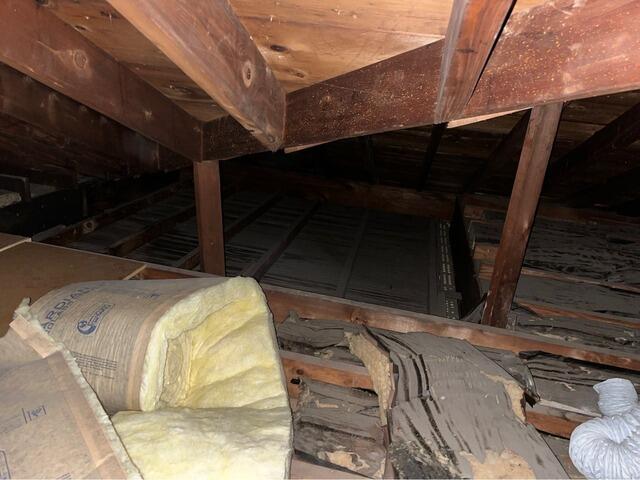
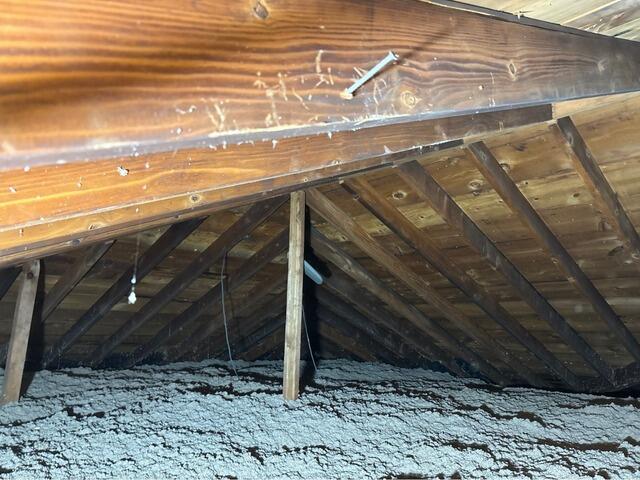
Rick reached out because the second floor of his home was difficult to keep comfortable. Like many two-story homes, the upstairs would get too hot in the summer and struggle to maintain consistent temperatures throughout the year. On top of that, high energy bills suggested the home was losing more conditioned air than it should.
When we evaluated the attic, we found several air leakage pathways allowing heat and conditioned air to move freely between the living space and the attic.
One area that required special attention was where the attic transitioned over the front and rear porch sections of the home. These areas are often overlooked during insulation projects and can become major sources of energy loss if they aren't properly separated from the conditioned space.
Our team sealed attic air leaks, sealed top plates and penetrations, insulated the attic access opening, and addressed airflow around the soffit areas. We also built insulation dams along the front and rear porch wall transitions to ensure insulation stayed where it belonged and provided continuous thermal protection.
By creating a stronger thermal boundary and reducing uncontrolled airflow, we helped the attic perform the way it was designed to. Now the upstairs stays more comfortable, temperatures are more consistent throughout the home, and energy efficiency has improved.
Attic insulation and scuttle access enlargement for Matt and Lori in Chester, WV
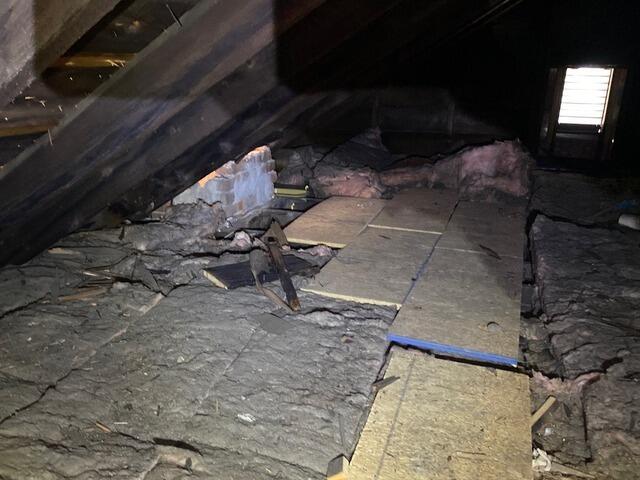
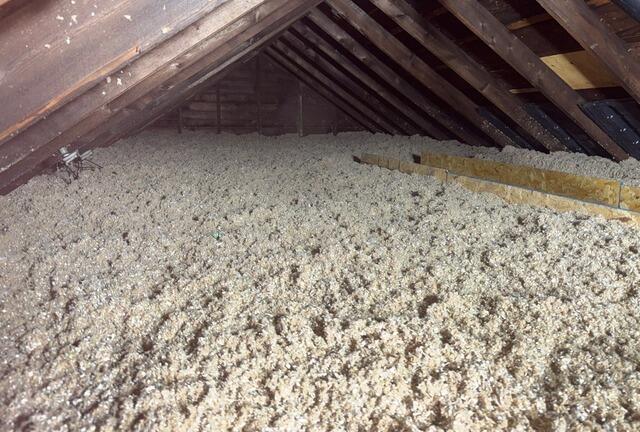
Matt and Lori, in Chester, WV, called with concerns about their access, insulation, and air escaping around the chimney in the attic space. Our home energy expert, Russ, provided them with solutions for to resolve these issues. Our team removed and disposed of existing insulation and prepared the work space for the installation of fresh, clean insulation. A SuperPlatform Catwalk was installed, made of 4" SilverGlo and 3/8" OSB boards to secure a walkway, while providing vertical retention dams as needed to hold blown-in insulation. They also enlarged and insulated the scuttle hatch cover with ZypFoam and SilverGlo fasteners, for easier access to the attic space equipment. Baffles were installed along the perimeter and Zypfoam was used anywhere air was penetrating the exterior walls and the top plate. The team wrapped up by wrapping the chimney with Rockwool and sealed with Fire Caulk.
Georgetown PA Attic & Storage


From inadequate and uneven to R60 all over and storage area
Middlesex, PA Attic Insulation


Sandy needed help with the heating bills in her home in Middlesex, PA. Russ from Home Environment Solutions came out and discovered the problem right away! Her attic had very little insulation and was just an empty space letting heat escape.
The HES team arrived and Zach and Cameron got to work. The firs thing they did was air seal the attic with ZypFoam. The next thing was to install a scuttle cover made from SilverGlo rigid foam to air seal the attic hatch. Lastly the team installed TruSoft Cellulose insulation to insulate the attic.
Now that Sandy's home is air sealed and insulated her warm air will stop escaping keeping her home warm and her energy bill low.
West Middlesex, PA Attic Insulation


Sandy needed help with the heating bills in her home in Middlesex, PA. Russ from Home Environment Solutions came out and discovered the problem right away! Her attic had very little insulation and was just an empty space letting heat escape.
The HES team arrived and Zach and Cameron got to work. The firs thing they did was air seal the attic with ZypFoam. The next thing was to install a scuttle cover made from SilverGlo rigid foam to air seal the attic hatch. Lastly the team installed TruSoft Cellulose insulation to insulate the attic.
Now that Sandy's home is air sealed and insulated her warm air will stop escaping keeping her home warm and her energy bill low.
our service area
We serve the following areas
- Alliance
- Atwater
- Barnesville
- Belmont
- Beloit
- Bethesda
- Bolivar
- Bowerston
- Cadiz
- Cambridge
- Canton
- Carrollton
- Deerfield
- Dellroy
- Dennison
- Diamond
- Dover
- East Canton
- East Rochester
- East Sparta
- Flushing
- Gnadenhutten
- Hartville
- Homeworth
- Jewett
- Kimbolton
- Lore City
- Louisville
- Magnolia
- Malvern
- Mineral City
- Minerva
- New Philadelphia
- Newcomerstown
- North Benton
- North Canton
- Paris
- Piedmont
- Port Washington
- Quaker City
- Salesville
- Scio
- Sebring
- Sherrodsville
- Stone Creek
- Strasburg
- Tippecanoe
- Uhrichsville
- Freeport
- Waynesburg
