
Serving Greater Pittsburgh & Northern Panhandle, Washington, Weirton, Pittsburgh, and surrounding cities
Home Environment Solutions Before & After Photos
Click on a photo to enlarge.
Eliminating Attic Mold and Ice Formation in Bethel Park, PA 15102
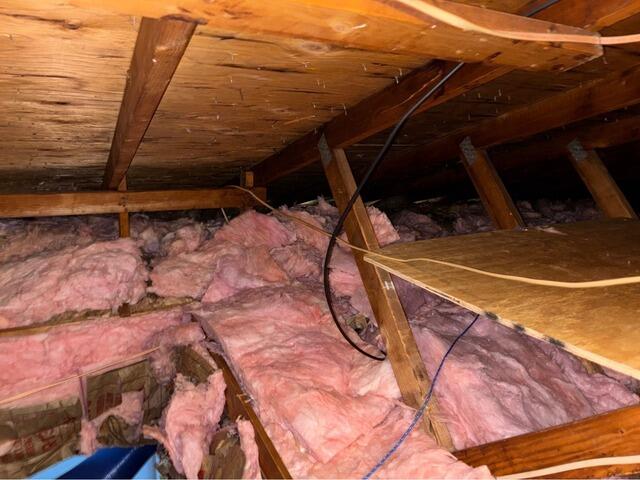
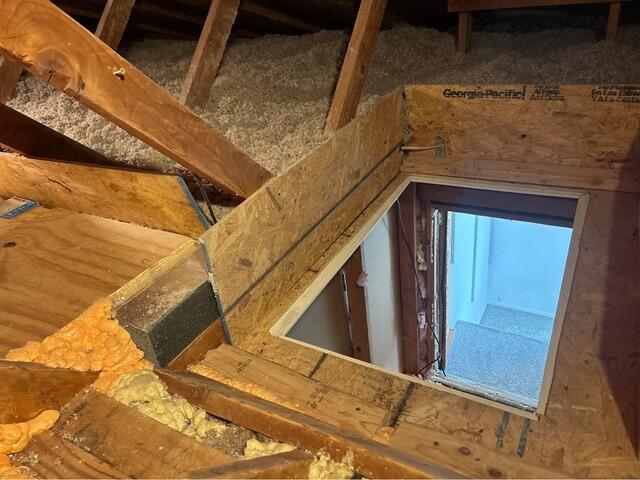
Chris reached out after dealing with high energy bills, uneven temperatures upstairs, and a more serious concern; mold and ice forming inside the attic.
Those issues usually point to the same root cause: warm, moist air escaping from the home into the attic. When that air hits a cold surface, it can create condensation, mold growth, and even ice build-up.
When we evaluated the attic and found air leakage was allowing heat and moisture to rise into the attic space, creating the conditions for both mold and ice.
Our team started by remediating the mold and restoring the attic to a clean, safe condition. From there, we focused on correcting the underlying problem. We sealed attic air leaks, sealed top plates and penetrations, addressed chimney-related leakage, and improved attic accessibility, so the entire space could be properly treated. We also upgraded insulation levels to help control temperature and reduce heat loss.
By stopping the airflow and improving insulation, we eliminated the conditions that were causing both the mold and ice formation. Now the attic is clean, dry, and properly sealed. Temperatures upstairs are more consistent, and the home runs more efficiently without the risk of those issues returning.
Pittsburgh PANeville Island Crawl Space Insulation


Jill reported that she felt this was the best money shes ever spent and her room was the same temperature as the remainder of the home. Jill is now using her dry crawlspace for extra storage.
Pittsburgh, PA / Neville Island Crawlspace


Per Customer, best Money Spent!
Pittsburgh, PA Home Attic Insulation


Betty contacted Home Environment Solutions to find out about getting insulation for her home in Pittsburgh, PA. Russ came out and provided her with a free in home energy audit. During the visit Betty pointed out some mold that she had noticed. Russ told her that Home Environment Solutions was an expert in mold remediation as well as home comfort.
The HES team arrived and got to work tearing out the old inefficient insulation and treating the mold. Once the Insulation and mold were gone the team air sealed Betty's attic and installed TiteShell light covers. The Chimney was then wrapped with rock wool and then the whole attic was given a thick lay of cellulous insulation.
Pittsburgh, PA Home Attic Insulation


Betty contacted Home Environment Solutions to find out about getting insulation for her home in Pittsburgh, PA. Russ came out and provided her with a free in home energy audit. During the visit Betty pointed out some mold that she had noticed. Russ told her that Home Environment Solutions was an expert in mold remediation as well as home comfort.
The HES team arrived and got to work tearing out the old inefficient insulation and treating the mold. Once the Insulation and mold were gone the team air sealed Betty's attic and installed TiteShell light covers. The Chimney was then wrapped with rock wool and then the whole attic was given a thick lay of cellulous insulation.
our service area
We serve the following areas
- Alliance
- Atwater
- Barnesville
- Belmont
- Beloit
- Bethesda
- Bolivar
- Bowerston
- Cadiz
- Cambridge
- Canton
- Carrollton
- Deerfield
- Dellroy
- Dennison
- Diamond
- Dover
- East Canton
- East Rochester
- East Sparta
- Flushing
- Gnadenhutten
- Hartville
- Homeworth
- Jewett
- Kimbolton
- Lore City
- Louisville
- Magnolia
- Malvern
- Mineral City
- Minerva
- New Philadelphia
- Newcomerstown
- North Benton
- North Canton
- Paris
- Piedmont
- Port Washington
- Quaker City
- Salesville
- Scio
- Sebring
- Sherrodsville
- Stone Creek
- Strasburg
- Tippecanoe
- Uhrichsville
- Freeport
- Waynesburg
